FALL 2023 | VOLUME 3 ISSUE 1

FALL HUMANITIES NEWSLETTER
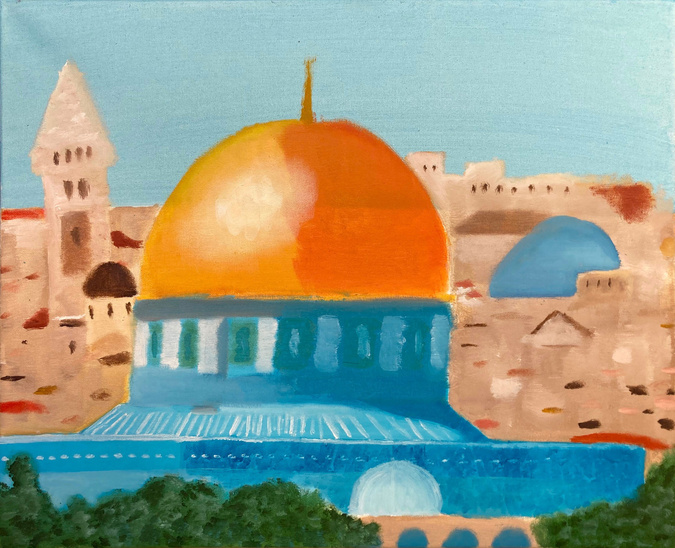
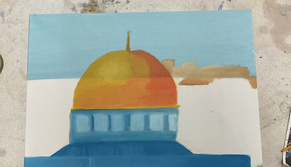
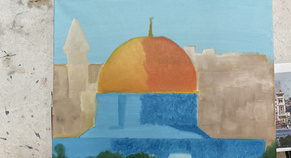
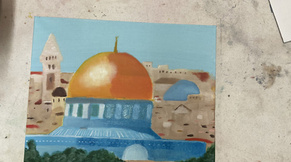
Artwork by Undergraduate student Robert Flynn. More information on the art on the last page!
ROOSEVELT UNIVERSITY
FEATURED IN THIS ISSUE:

Fall and Spring course highlights
We welcome the newest editions of our department: Graphic Design and Journalism and Media Studies
Honoring our Fall graduates and faculty’s newest publications
and works


Sandra Frink
Chair of Humanities Department

Chairs
Andrew Trees
Associate Chair ofHumanities Department
From the
A Word
Happy New Year all! Having just finished our first semesters as chair and associate chair, we would like to thank everyone for being patient with us as we learn the ropes. We have been inspired by the dedication, creativity, and enthusiasm of our
colleagues and students. As many of you know, we are also newly expanded. This past Fall, we welcomed Graphic Design, Communica- tion, and Journalism and Media Studies to our growing department. With more than half a dozen programs, it feels to us like
the kind of big, chaotic family out of which happiness is made.
The root meaning of Humanities is nothing less than the study of human culture, and so it should come as no surprise that this semester brought a rich offering of discus- sion, creative work, and scholarship from our department—some of which will be fea- tured in this newsletter. From the American Dream Reconsidered Conference to book readings to art work, members of the Hu- manities Department enriched our commu- nity and the wider world with their work.
We hope all of you enjoy reading about what your friends, students, and faculty have been up to! - SANDRA AND ANDREW
FALL COURSE SPOTLIGHTS:
WRITING FOR NONPROFITS
PROFESSOR MICHAEL BLANCATO
What make this an experiential learning course?
Writing for NonProfits opens the door for a multitude of students to partake in helping their community. We will be working closely with the Southeast Environmental Task Force thanks to Yessenia Balczar, a Roosevelt Alumni. By using their professional rhetoric writing skills, the students will create promotional content for this year’s non-profit.
What kind of students might be inter- ested in this course?
This course is cross-listed for English, Sociology, and Sustainable Studies students. It emphasizes group work and skills that students will be able to take with them in their professional lives. And the students will also learn how to build a relationship within an organization and with Chicagoland com- munities.
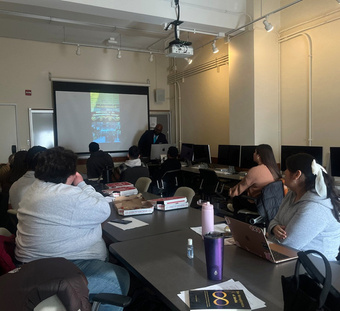
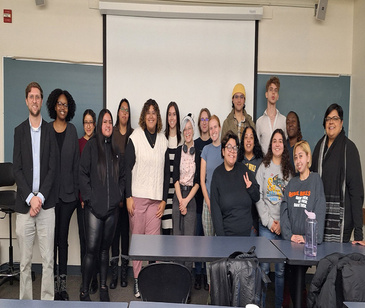
December 5th showcase
MEDIA WRITING
PROFESSOR JOHN FOUNTAIN
Media Writing teaches students the ins
and outs of journalistic writing. Taught by prize-winning journalist John Fountain, students receive get first-hand experience and expert advice. This year, students also visited the ChristKindlMarket to gather information for their multimedia pieces.
In addition, students conducted on-the- street style interviews to try out one of the techniques journalists sometimes employ. The course focuses on helping students learn how to write profiles and features as well as how to create multimedia pieces.
Multimedia Final Projects


WHAT IS GRAPHIC DESIGN?
WITH PROFESSOR GLENN
“Why should YOU be a Graphic Design major or minor?”
Design, in general, is literally everywhere. Look around. Everything you see was designed, every car, every pen, every window, every pair of pants, every poster, logo, magazine, book, website, everything. Some better than others, and that is where design education comes in. At Roosevelt University we train our aspiring graphic designers to make better design decisions based on the fundamentals of graphic design with a nod to the past and an eye to the future of design.
Poster by Gabi Kiela from Des 200
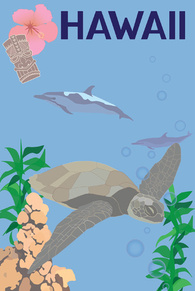
“What is Graphic Design?”
All about Graphic Design at Roosevelt!
It is an often misunderstood and mysterious field and pro- fession. To me, graphic design is about communicating a message in a way that is understood by the audience in
the way intended by the seller. That message often has a com- mercial purpose, such as a promoting a product or service. It is important in an ever more globally diversified environ- ment that messages are delivered and received in an effec- tive and successful manner. Graphic design not only helps get the message notice, but aids in the proper perception
of the message by the intended audience. Choices made by the designer in terms of type, color, layout, etc., can all help focus the message for better efficacy.
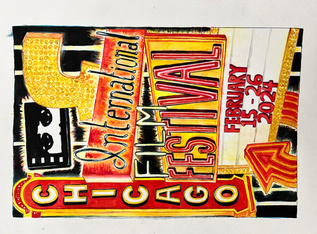
Poster by Mara Rolan from DES 235
The introductory graphic design courses at Roosevelt cover the basics of design, and the tools used by designers. In
DES 200 Intro to Design and History (soon to be renamed DES 130 Color and Design History), students will get an overview of the elements and principles of graphic design, which include concepts such as shape, line, balance, dom- inance, rhythm, pattern, alignment, repetition proximity, etc. The elements of design are like the ingredients in a recipe (flour, eggs, milk, etc) whereas the principles are like the techniques (stir, combine, fold, bake, saute, etc). Students will also learn Color Theory — how color works, color modes and schemes, the meaning and symbolism
of color, etc. — and the History of Graphic Design. These topics set the foundation upon which students will expand their knowledge and skills in subsequent design classes.
The other introductory graphic design class is DES 235
Digital Illustration and Imaging. In this course, students
will learn the tools of graphic design, mainly Adobe Illus-
t
toraotlosr, and Photoshop. But these programs are merely
like a pen or pencil, so students need to learn how these
tools are best used in the execution of their designs based
on their knowledge and understanding of graphic design
principles.
Having an understanding of graphic design is important in
almost any career. Society today is very brand-aware and
brand-oriented. And developing a brand visually is what
graphic design helps to do. According to Mara Roldan,
a first-year transfer student from De Anza College in
northern California, “In my opinion, graphic design is the
most useful creative major. I’m passionate about art, so
I’m interested in studying a practical field to help pursue a
beneficial career.”
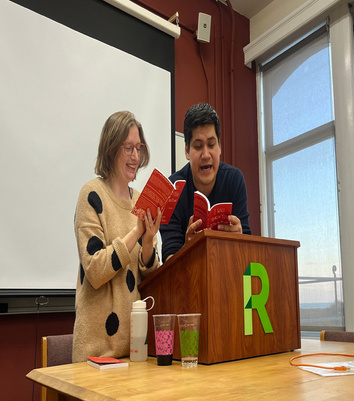
TIM MOORE BOOK
READING
OCTOBER 30TH 2023
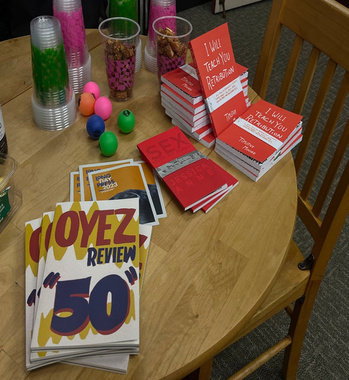
On the eve of Halloween, rather than getting spooky, the Humanities Depart- ment got funky when it welcomed back Tim Moore. He is an up-and-coming author and a former Roosevelt student! Moore graced the audience with a read- ing of his newest collection of short
stories, I Will Teach You Retributions,
with the help of Professor Jessica Chi- ang. Moore visited an MFA creative writing workshop along with his pub- lisher to give our students deeper in- sight into how to get published.
Professor Jessica Anne Chiang Latest Publication:
SEX WITH MY
FAMILY
Sex With My Family is a short chapter excerpted from
a longer manuscript I’m working on titled Finite Jess—
an ambitious living-document of sorts, including lists, erasures, and collage. It is also a book about and to my brother who died suddenly and tragically by overdose. It’s lonely being in between projects, so I went look-
ing for a home for the pieces of my book that felt pol- ished enough to publish. I’ve had a crush on Long Day Press, so when I saw they were calling for
submissions, I sent the chapter along. I’m so grateful they picked it up! It turned out so good and not only stands alone as
a complete essay but is also a nice teaser for Finite Jess.
My editor, Josh Bohnsack, is a like-minded weirdo, and he embraced my love for hybridity and cows and worked with me to incorporate the photographs and refine the litany format. Josh teaches the Literary
Mag- azine Production class here at Roosevelt and is a god among men. Issue #50 is out now and on fire. Please stop by AUD 840 to pick up a copy! - Jessica Chiang
MAJOR MADNESS 2023
We are happy to report that the Humanities Department table was well attended—although the free candy may have helped with that.
Many students signed up for more information, and we are looking forward to the new faces ready to join our department!
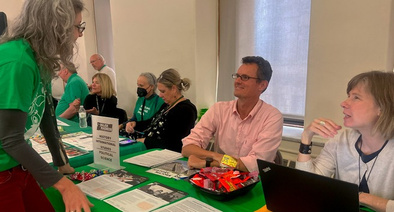
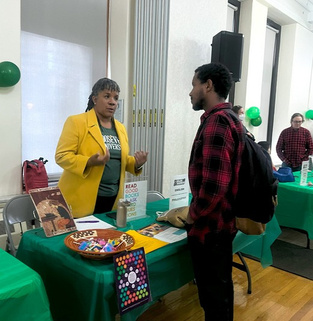
On October 12th, the mezzanine of the Ida B Wells building was abuzz with activity. Splashes of green and lots of chatter were taking place along folding tables decorated with school-themed items and faculty as 2023’s Major Madness took place.
Put on every year to showcase the majors and minors the school has to offer along with resources for academic success such as the honors program and career-based organizations, the event is geared towards freshman and undecided students but also offers advice to any interested students—a kind of intellectual speed dating to see which major might be a good fit.
AMERICAN DREAM RECONSIDERED CONFERENCE
The American Dream Reconsidered Conference returned once again this November, and as always, the Humanities Department played a major role in the Conference from programming to moderating to panelists to providing much of the audience at the events! This year’s theme was Mind, Body, and the American Dream—a fitting choice given the Supreme Court decision to overturn Roe v. Wade as well as Roosevelt’s recent promotion to Division II of the NCAA and the CCPA’s strong emphasis on the body and mind in its various programs. “We were really pleased with how the conference turned out,” said Professor Andrew Trees, one of the programming co-chairs along with Professor Margie Rung. “Attendance was strong for almost all of the events, and we received a lot of positive feedback, particularly about the reproductive justice panel and the Mary McCleod Bethune panel.” In addition, Trees offered an experiential Honors course built around the Conference. Students engaged in a number of projects, including producing their own podcasts about the American Dream and designing and planning their own conferences. “Through inspiring panel discussions and gratifying group projects, this course helped me understand the importance of pursuing my own American dream while learning to appreciate that of others,” said Adilene Arias of the course.
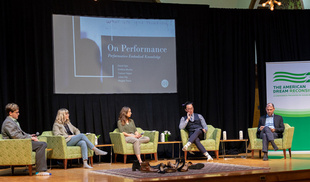
"Through inspiring panel discussions and gratifying group projects, this course helped me understand the importance of pursuing my own American
dream while learning to appreciate that of others," said Adilene Arias of the course.
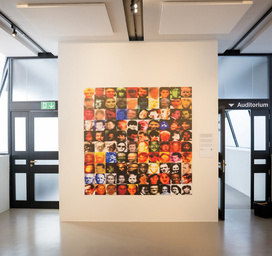
Michael ENSDORF
OVERSEAS EXHIBIT
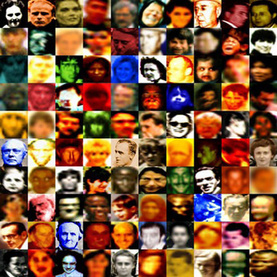
The images in “Memory Grid” were culled from a combination of sources: photographs of world events, advertising imagery, and family albums (my own). The faces from world events consisted mostly of anonymous bystanders/participants/witnesses; the individuals in the advertisements were also anonymous; the family portraits included many members of my immediate living family, as well as members that have passed away, beginning with my great grandmother and great grandfather from Germany. The selection process for each category was partly conceptual, partly formal. I tried to extract faces from historically famous media images with attention to individuals in the background. I also tried to pay attention to the way the faces were transformed by the process of extraction, enlargement, and colorization. The advertising imagery I chose was mostly pretty banal stuff—catalogs, generic newspaper ads, etc.—because I wanted a complete removal of identity. The family portraits included my great grandfather, great grandmother, grandfather, grandmother, father, mother, aunt, uncle, and wife at different stages of their lives. The process I used relied heavily on Photoshop’s interpolation (bicubic) features. When an image is enlarged in Photoshop, the program adds pixels in order to create a smooth, as opposed to a pixelated/mosaic image. It’s worth noting that I chose faces that were both close to the camera and far away. The further away the subject was from the camera in the original photograph, the smaller the cropped image, the more interpolation needed to enlarge the face. This also controlled the amount of softness and blurring of the final image. “Memory Grid” is dated 1995, and was created using early ‘90s computer technology. The piece has been exhibited internationally in multiple galleries/museums, and two images from the series are in the collection of the Museum of Contemporary Photography. - Mike Ensdof


HALLOWEEN FLASH FICTION
Works from students who participated in Vince Francone's yearly flash fiction contest.
Them
Never Realized How Much the Subway Shakes
Soulmate Roulette
A poetic presentation of panic & horror By: Alex Schultz
By: Cecilia Quirarte
Home alone, he found himself sitting on his living
room couch, feet stretched forward on the coffee
table, and all lights off except the faint blue glow
emanating from his phone.
He was scrolling through TikTok when he stum-
bled over the “HOW FAR IS YOUR SOUL-
MATE?” filter on his For Your Page. Why not? he
thought, as he clicked on the filter to give it a try.
He already had what felt like a million and one
saved drafts of him using different filters, playing
games, and lip-syncing to all the catchy songs
that seemed to flood the app anyway. What’s one
more?
Pressing record, he almost smiled when he saw
the filter above his head cycle through all its
options before finally landing on “RIGHT NEXT
TO YOU”. However, his grin fell when he heard a
faint gasp, and turning towards the dark hallway,
he spotted two bloodshot beady red eyes peering
at him from the shadows of his open bedroom.
Violin Man on subway plays tunes,
arms taut, twisting with the bumping and rocking, vigor of his motions astounding,
yet no one pays any mind to his fling.
The music never stops.
I guess it is to be expected, here,
in a city where we’re trained never to look–
eye contact is criminal.
Even through the polish and grandeur of his
surely skilled and trained trance,
music so soft and sad and slow,
as his black hoodie strings dance to the tune,
is a beautifully concocted concerto in this CTA cell. Unsturdy subway car rattles, lights flicker–
lights are off?
The music never stops.
I can hear them thud through the darkness,
former riders relieved of their respiration,
blood and blade and bone,
crunching corpses in the absence of illumination, Violin Man is moving around train car.
It’s loud, then soft, and loud, and soft,
faster and faster he plays,
four, five, six, seven,
train rails scrape loud in my earsdrums.
Lights are off.
The music never stops.
Something is rolling ‘round but it’s of no use.
Seeing in this blackness isn’t an option.
It’s loud, then soft, and loud, and soft,
until the grinding gears conclude,
the splat of spurting vessels subsides,
the bumping of barriers against train car ceases as sinister silence spreads underneath underpass, broken only by beating heart in my hollowed chest, Crescendo crests and sunshine spreads through as subway exits the tunnel.
His arms are taut and twisting,
with such inhuman and sickening pops
Violin– Something– is moving around the room,
and this time, it’s…
making eye contact with me.

By: Cesar Gonzalez
This isn’t what she wanted. Why did she do it? Were they after her? No. Stop. She needed to calm down. She was stressing too much, and that was unhealthy. She needed to calm down, take a deep breath, and find a hiding place. Fast. She went to the second floor and found a small, cramped, musty closet to hide inside. It wasn’t pretty, but at the moment, she chose life. She stuffed herself inside the closet and closed the door. It was a tight spot; she felt like an elephant trying to squeeze inside a glass bottle. But at least she was safe, for now, so she could not complain. As time passed, she sat there reminiscing what led
her to this moment, what led her to be a part of them.
Perhaps it was how isolated, afraid, and lonely she felt. Adding fuel to the fire was that she had just lost her job and was evicted from her apartment. She had nothing to lose,
so why blame herself for becoming a part of them? It was their fault. They had preyed on her like a lion preys on a helpless gazelle. She was the victim. They were the criminals.
No! This was her fault. She knew what she was getting herself into when she joined. But what else could she have done? They treated her like family. Like she was a decent human being, a regular person, when the rest of society made her believe she was worthless. In a way, she needed them. But now, all they wanted to do was end her because she had been disobedient. She ran away from them escaped their tight grasp on her. She was supposed
to, as doing so could result in severe punishment. But she had to do it, especially after
what they made her do. She only hoped if they did kill her, they would leave her body in
a state where an open-casket funeral was at least possible.
There was a small keyhole on the doorknob. Peeping through it, there was no one or
nothing in the room. The room was dark, as if covered in the blackest drapes in prepara- tion for mourning. However, there was a small window in the room that allowed moon- light from the outside to glisten ever so brightly like a hopeful couple’s engagement ring.
Yet, it was not enough to burn through the void of darkness which overtook the room.
There was a sudden loud noise, a set of footsteps walking up the stairs to the room. She could not determine if these footsteps belonged to one person or an entire group. So, it was best to keep still and quiet as a mouse. The footsteps became louder and closer. She took a look through the keyhole, but there was nothing. Everything appeared calm. But
then again, she heard the footsteps approaching, this time louder and closer. Another
peep through the keyhole revealed there was no one in sight. Was she losing her mind?
Haullecianting from the anxiety and panic, this was causing her?
The footsteps picked up again. This time, they sounded close, as if they were in the room
with her. And then, they seemed to stop right in front of the closet she was hiding in.
MICHELE CORAZZO'S
EXHIBITS
Michele Corazzo participated in two ex- hibits this fall. She was part of the 50th Anniversary exhibit at ARC Gallery where she had a raku sculpture on display. She was also juried into the 80th Annual Sa- lon Show at the Munster Center for Visual and Performing Arts in Indiana.
Last spring she was awarded second
place at the Michiana Annual Art Competition in St. Joseph, Michigan (held at the Box Factory of the Arts). She also exhibited
her paintings of the South Shore commut- er train interiors at SFC Gallery in Michi- gan City, Indiana.
JEFF SEITZER'S
THE FUN MASTER
The Fun Master: A Father’s Journey of Love, Loss, and Learning to Live One Day at a Time is about
the transformative relationship between a father and son. A self-involved academic struggling to cope with his own neurological problems, Jeff could hardly take care of himself, let alone a child with special needs, when his son, Ethan, was born. But despite multiple surgeries, hospitalizations, serious breathing and swallowing problems, hearing loss, and a challenging social environment in his first months of life, Ethan thrived—all the while teach- ing Jeff to take things as they came. And eight years later, the arrival from China of adopted baby sister Penelope took Jeff’s on-the-job training to a whole new level.
Ethan’s instinct for fun proved the perfect comple- ment to Jeff’s determination to live life fully. He
died too young, but not before he, Penelope, and their mother, Janet, taught Jeff that the true path to hap- piness was putting other people’s needs
before his own—and living in the moment rather than trying to control it.
The Fun Master is a Finalist for the Best Book
Award and International Book Award as well as
for The Book of the Year from the Chicago Writers Association

SPRING 2024
COURSE HIGHLIGHTS:
What is intelligence? And what is arti- ficiality? Can intelligence work without images and words? Can you have an AI as a friend? Can you love an AI? Will an all-knowing AI mean the end of priva-
cy? Can perfected artificial intelligence solve all social problems and/or become all-powerful? What is the greatest threat of AI? If AI is genuinely smart, would
that make it more or less dangerous, and more or less benevolent? Does humanity require artificial or technological help
for its prosperity or salvation? Such the- oretical, technical, and moral questions will be the subject of our course.
PHIL 205:
PHILOSOPHY OF AI
Professor Zarko Minkov
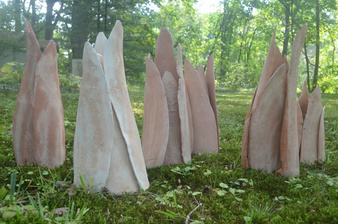
Sextet, 2022, 18” x 15” x 4’ clay

Second place winner Box Factory for the Arts
This sculpture continues my series of Menhirs which was initially triggered by tree trunks and has evolved in other directions. Here, the forms are a celebration of music and nature - Michelle Corazzo
JMS 342:
TRAIL OF THE PRIMARY
Professor Mary Ellen Schiller
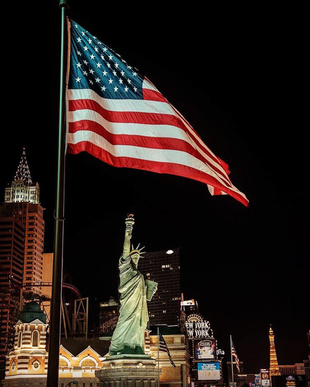
A rotating “Topics” course focusing on journalistic writing and reporting covering political events and processes, in this case specifically regarding the 2024 quadrennial primary elections and events, leading to the November election.
In providing context for the examination of the political processes, and media coverage thereof, the course also ex- amines: U.S. democracy, its institutions, characteristics and evolution; the electoral process; and the role of political parties and voters in the electoral process. Emphasis will be on the characteristics and practices of media in reporting on, as well as shaping, public views of parties, candidates, political polling and the outcomes of primary events, as well as its interpretations of said events.
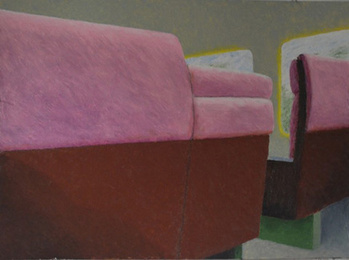
So little light, 2019, 30” x 40” oilstick on matboard
One person show at SFC gallery.
This series, Commute, documents my love/hate relationship with the train ride on the South Shore line to Roosevelt. I appreciate the conve- nience and am calmed by the rigid geometry in the cars but also chaff under the bizarre
lighting, the claustrophobia, and peculiar colors of the seats. - Michelle Corazzo
CONGRATULATIONS GRADUATING STUDENTS
About the Editors
Maddalena Kelly and Andrew Trees


Good luck on all your endevours in the future!!!!
Hello, I am a junior majoring in Digital Marketing, Advertis-
ing, and Public Relations. I am honored to be the Humanities Department Student Ambassador this year. It is an amazing opportunity not only to grow in my career but to also meet the amazing staff and students in this department! For the future newsletter, if you have any ideas for a segment or want to pro- mote a course, event, or organization feel free to email me @mkelly28@mail.roosevelt.edu. Enjoy! -Maddalena
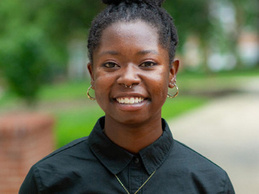
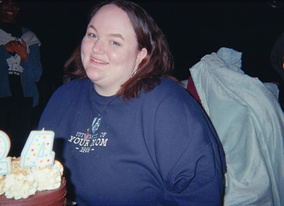
Mia S. Moore
BA in History and minors in Sociology and Social Justice Studies
Departmental Honors in History
Honors Thesis
“Just do your best and try to have fun learning.”
Natasha R. Kenny
BA in English and minors in Sociology and Women’s and Gender Studies
“I am the master of my fate, I am the captain of my soul.” William Ernest Henley
Hi, I am the new associate chair of Humanties. It has been fun
working on this with Maddalena. It brings me back to my days
working as a newspaper reporter. If you have suggestions for
something to include in a future newsletter, please feel free to
email me: atrees@roosevelt.edu. I hope you enjoy this issue!-
Andy
About the Artist
Robert Flynn
Flynn is an undecided undergraduate with a passion for art, psy- chology, and law. Flynn believes things will work themselves out, and he is excited for what the future will hold. Flynn describes himself as a supportive and helpful friend.
Behind the process:
The assignment required us to pick a landscape from Israel/Gaza for our painting. I came across the Dome of the Rock. Every image was visually striking, the gold really stood out among the other structures in the city. The outside walls were very intricately de- tailed (as well as the mosaics on the inside).
Knowing that it was located in Jerusalem, I thought it would be meaningful to showcase. It is believed that is where the Prophet Muhammad ascended to heaven. Additionally, it is the oldest exist- ing Islamic monument and was constructed in the late 7th century.
I first started painting the upper half of the canvas to represent the sky. Afterward, I moved on to the top of the structure and worked my way down. Because we had to create a sense of perspective in this assignment, it is most detailed in the front. It took a bit of time to mix the colors and I went over it quite a bit to be more accurate.
I noticed a bit later that the printed picture (for reference) was a
bit different than the original, but I didn’t have time to make a lot
of changes. I’ve always been a bit critical of my work, so I would’ve liked to better capture the details, but I think I was successful in its overall impression. - Robert Flynn
Mary Cerjan
MA in History
Schenieka D. Hoskins
BA in English
Kevin S. Jackson
MA in History
Selene M. Mendoza
BA in Women’s and Gender Studies Minor in Sustainability
Luis E. Munoz
BA in Graphic Design
Samantha M. Nelson
BA in Women’s and Gender Studies and Psychology
Departmental Honors in Women’s and Gender Studies
Joseph D. Zeman
MA in History
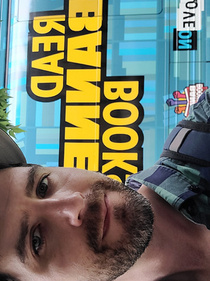
Paul Waldhart
MFA in Creative Writing
“Writing is the transmission of the hu- man spirit, and you can’t AI the human spirit” - Jess Chiang

THANK YOU!
Mike Blancato
Undergraduate Writing Director mblancato@roosevelt.edu
Celeste Chamberland
History and International Studies Director cchamberland@roosevelt.edu
Jess Chiang
Creative Writing Director jjschlegel@roosevelt.edu
Glenn Canigiani
Graphic Design Director gcanigiani@roosevelt.edu
Zarko Minkov
Philosophy Director
sminkov@roosevelt.edu
Kim Ruffin
English Director
kruffin@roosevelt.edu
Mary Ellen
Schiller
Communication and Journalism and Media
Studies Director mschille@roosevelt.edu
Sandra Frink
Women’s and Gender Studies Director Department Chair sfrink@roosevelt.edu
Andrew
Trees
Associate Chair
atrees@roosevelt.edu
Special thanks to our directors and chairs!
Follow us on social media!
Instagram @rooseveltUhumanities Twitter
@ruhumanities